
A breakthrough in non-invasive cancer treatment that uses your body’s own biology to fight tumors — safely, selectively, and effectively.
Since 1998, Dr. Dennis Paul and Dr. Harry Gould of Louisiana State University have been studying basic cell function, with special focus on how sodium channels respond to disease. Their findings have allowed them to take advantage of a previously known property of malignant cancer cells to devise a safe and effective treatment for many of the deadliest cancers: Targeted Osmotic Lysis (TOL).

Targeted Osmotic Lysis (TOL) is a precise treatment that selectively destroys cancer cells. A low-dose cardiac drug opens ion channels specific to tumor cells. A series of gentle electrical pulses then causes those cells to swell and burst — while leaving healthy tissue untouched. No cutting. No chemo. No collateral damage.

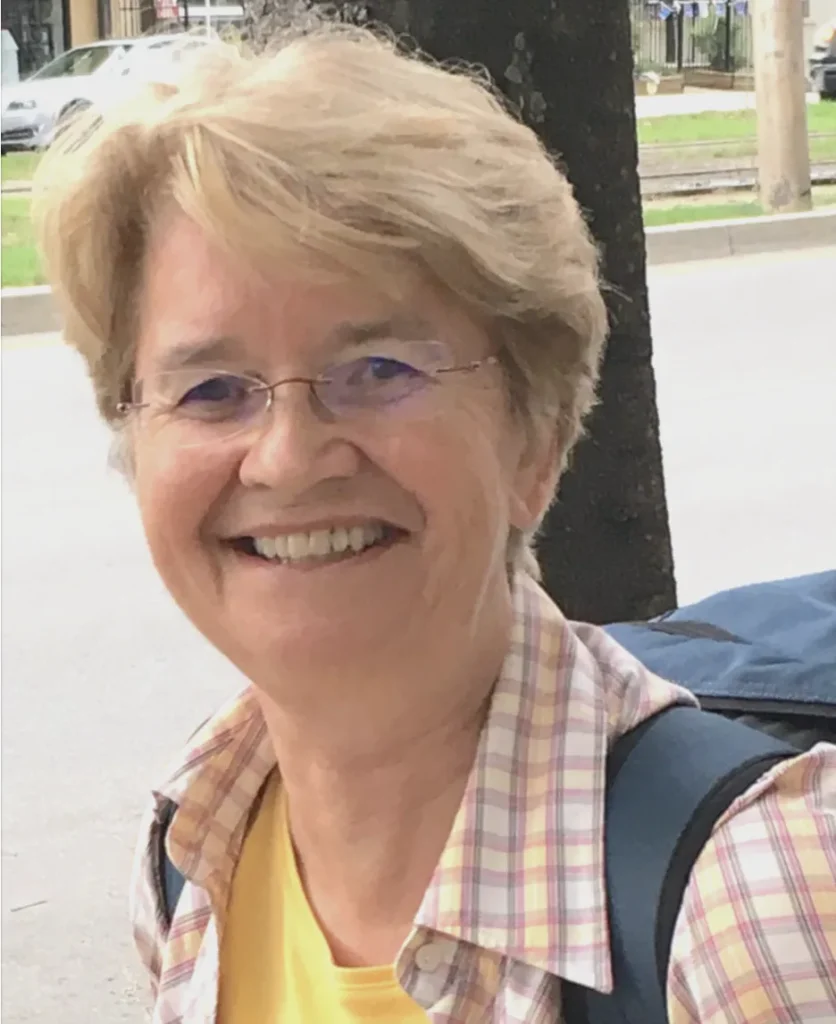
Ms. Miller, a second-generation technology entrepreneur, has focused her career on leading enterprises to plan and deliver challenging, innovative projects. She served for 18 years as Commissioner of the Port of Seattle, one of the nation’s largest combined airport and seaport authorities, where she was a leader in the successful effort to add the third runway at Seattle-Tacoma Airport and to transform the Seattle waterfront. She also was the founding Chair of Port Jobs, a non-profit enterprise that has connected nearly 30,000 people to jobs in the port and aviation sectors, with special focus on groups traditionally underrepresented in those fields. She has served as a board member of a privately-held real-estate development company that brought the largest mixed-use residential development to downtown Seattle, and as the Executive Director of the Arboretum Foundation, where she led the fundraising for major new exhibits and infrastructure projects. Previously she was in private law practice in Seattle and in Philadelphia.
Ms. Miller is a graduate of Brown University and of Yale Law School. She is a member of the Washington State Bar Association and serves on the board of Port Jobs. She brings the company expertise in fundraising, budgeting, critical path project management and delivery, governance, strategic partnerships, and external relations.
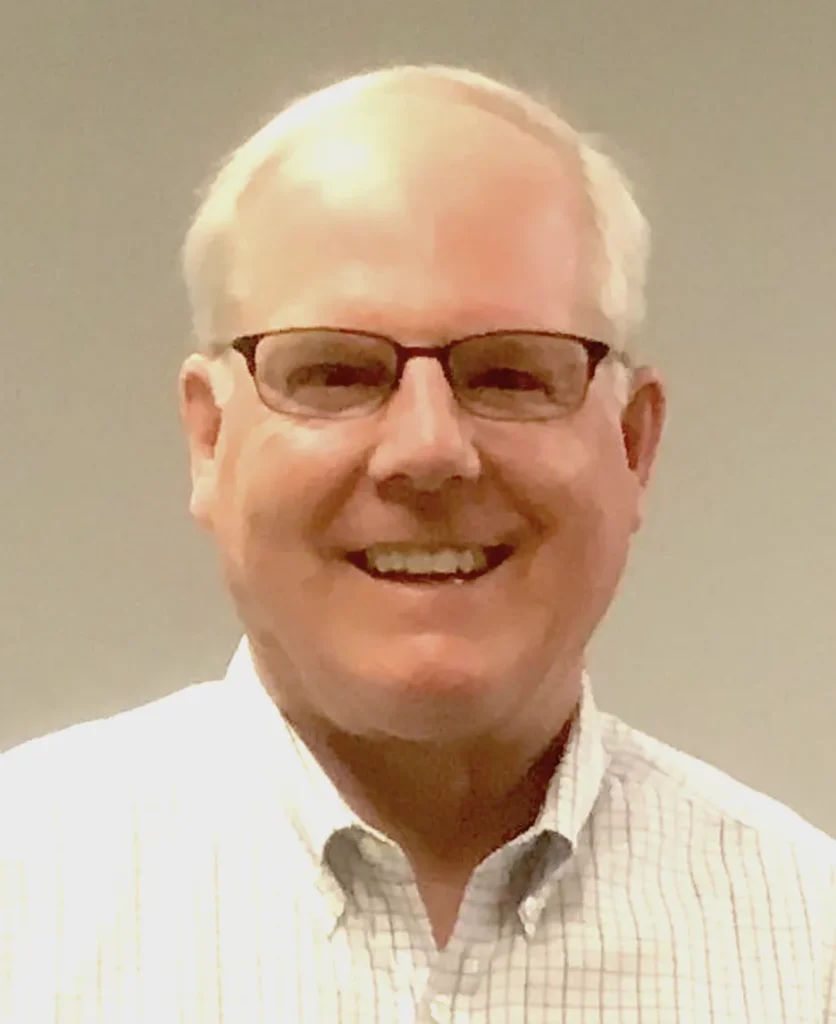
Dr. Paul is co-inventor with Dr. Gould of Targeted Osmotic Lysis (TOL). He is Professor of Pharmacology and Experimental Therapeutics at Louisiana State University Health Sciences Center (LSUHSC) in New Orleans.
Drs. Paul and Gould have had a research collaboration for more than 20 years. Their work initially focused on general concepts and biological principles related to the role played by sodium channels in the mechanisms responsible for pain and diabetic peripheral neuropathy. Their research on sodium channels and sodium pumps led directly to their research on manipulation of these mechanisms in the treatment of advanced cancer.
Dr. Paul’s research has also contributed to the understanding of opioid pharmacology and drug-drug interactions. He received his undergraduate training at the University of Cincinnati, his Ph.D. from the University of British Columbia, and completed Post-Doctoral training at the Memorial Sloan Kettering Cancer Center. He has served on scientific advisory boards for Xanadyne Pharmaceuticals and St. Charles Pharmaceuticals.

Dr. Gould is co-inventor with Dr. Paul of Targeted Osmotic Lysis (TOL). He is Professor of Neurology and Neuroscience at LSU Health Sciences Center (LSUHSC) and has been board certified in Neurology and Pain Management. Prior to obtaining his medical degree, he was Associate Professor of Anatomy at LSUHSC and Assistant Professor of Anatomy at the University of Cincinnati.
His long research collaboration with Dr. Paul on sodium channels and pumps in neuropathic pain situations led to their discovery of the mechanisms used in the TOL treatment for advanced cancer.
Dr. Gould’s early research contributed to understanding the organization of sensory/motor systems in the cerebral cortex. He received his undergraduate training at the State University of New York at Stony Brook, his Ph.D. from Brown University, and his M.D. from LSU Health Sciences Center. He has served on scientific advisory boards for Elan Pharmaceuticals, Parke-Davis, Pfizer, Ortho-McNeil Pharmaceuticals, Novartis Pharmaceuticals, Alpharma, Inc. (currently King Pharmaceuticals), Endo Pharmaceuticals, Gilead Sciences, Inc. and Depomed, Inc.

Mr. Mills has 35 years of experience as a serial entrepreneur, including taking a medical device from the “napkin stage” through development, FDA approval, Medicare code approval, marketing, launch, and successful exit. His other ventures include software development, wetlands banking, and portable storage units.
He is a graduate of Louisiana State University in finance. He has previously been a licensed stock broker and financial advisor.
His experience in fundraising, marketing, and launching products provides expertise in raising capital, creating strategic alliances, and aggressively pursuing product and commercial development.

Mr. Janani has spent the majority of his life surrounded by the medical industry. He co-founded and helped develop DMS, a leading telemedicine platform followed by becoming the president of Neuro Technology Institute, the largest intraoperative monitoring company in Louisiana. He then went on to enter the pharmaceutical industry, founding DynaCord, one of the leading stem cell drug research and manufacturing companies in the US. Keyon engaged with Oleander in 2023 leading the establishment and management of international human pilot studies for Oleander followed by being appointed to the executive team of oleander in 2025. Keyon performed his graduate studies at the University of Colorado Boulder in the field of Electrical Engineering specializing in Biomedical Applications of Silicon Photonics.
TOL is a revolutionary treatment for advanced cancer that does not rely on surgery, chemotherapy, or radiation. It kills metastatic cancer cells by forcing them to take in sodium ions while blocking the cells from pumping the ions back out. The resulting buildup of sodium causes water to enter the cells through osmosis, swelling the cells until they explode. The animation video gives a short demonstration of how TOL works.
This is the most common question about TOL. Advanced cancer cells have many more sodium channels than normal cells do, which allows the cancer cells to amass much more sodium during TOL treatment. The cancer cells take in large amounts of sodium, then large amounts of water, and they swell and burst. The normal cells take in less sodium, and thus less water. They swell very little, and then return to normal. This process is explained best at the end of the animation.
By its nature, TOL works most effectively on advanced cancers. In the later stages of most cancers, cancer cells have 10 to 50 times more sodium channels than normal cells do. This differential is what allows TOL to destroy the cancer cells and not the normal cells (as shown in the animation). Earlier stage cancer cells are more like normal cells. A treatment that would destroy these early stage cancer cells would risk harming normal cells as well.
Yes. Although several good treatments are available for early-stage cancers, most treatments have not been found to be effective on later stage cancers. Because TOL works better on later stage cancers than on earlier stage ones, it appears to be a paradigm shift in the way cancer can be treated.
No, we believe that it will not work on most sarcomas, some blood cancers, and some isolated carcinomas. We have tested TOL in mice on breast cancer tumors with very favorable results (80% cell death with one treatment). We have treated small cell lung, prostate, colon, and pancreatic cancers in tissue culture and achieved 97-100% cell death with these cancers. We have also had positive results in tests on mesothelioma, in both mice and tissue culture. The overexpression of sodium channels in the metastatic cells of other carcinomas suggests that many of them will also respond to this treatment.
Unlike many of the newer cancer treatments that target species-specific genetically-determined proteins, TOL is not genetically targeted. By contrast, TOL works on a basic cell mechanism that is essential for cell survival and is present in all animals. The overproduction of sodium channels in cancer cells is similar in both mice and humans. Since these biological mechanisms are the same, the results should be the same.
Current surgical techniques frequently produce significant disfiguration and must be followed by some course of radiation or chemotherapy. Current radiation and chemotherapy treatments kill both normal and cancerous tissue resulting in serious damage to the individual being treated. The challenge is to give a treatment strong enough to kill the cancer, but not kill the patient. The side effects of such treatments usually include weight loss, hair loss, severe nausea, vomiting, and pain. Studies to date show that TOL will have a minimal effect on normal tissue. The most likely side effect will be a mild fever for one to three days. In addition, TOL destroys metastatic cancers wherever they are located in the body. (See the answer to the next question.)
Unlike radiation or surgical procedures, TOL need not be targeted at sites of known disease. We believe that one of the most important aspects of TOL is that it will destroy metastatic cells wherever they are located. So long as the cancer cells overexpress sodium channels, those cells may be destroyed when their sodium pumps are blocked and their sodium channels are opened. To effectuate a treatment where the cancer has metastasized, a patient’s whole body would need to be treated in a specially designed treatment device.
Almost all recent innovations in cancer therapy have involved the creation of a new drug targeted to a specific type of cancer. The path to regulatory approval for such treatments is usually very long and expensive. TOL is different. It is not genetically targeted and it does not involve a new drug. Instead, it involves the combination of a long-used, generic drug with stimulation from a new medical device. We believe that this fact combined with the fact that the treatment is for advanced disease where the current treatments are frequently ineffective is likely to make the path to regulatory approval shorter and less complicated than the path for approval of a new drug.
The first U.S. patent for TOL was issued December 30, 2014 for Targeted Osmotic Lysis of Cancer Cells (patent no. 8,921,320) and a second patent was issued on May 23, 2023 for Targeted Osmotic Lysis of Malignant Cancer Cells Using Pulsed Magnetic Field Gradients (patent no. 11,554,292). Patents have also been approved in Australia, Canada, Japan, and issued by the European Patent Office and nationalized by the following countries: Finland, France, Germany, Ireland, Luxembourg, Monaco, the Netherlands, Sweden, Switzerland, and the United Kingdom.
We have pursued this research without major grant funding and so it has taken time to do the experiments and replicate the results. We presented our first peer-reviewed preliminary observations at the American Society for Cell Biology in December, 2013. The first peer reviewed article on TOL was published in the scientific journal Oncotarget in 2018 and several more papers have been published since.
We are working under FDA guidance to do the preliminary safety work necessary before beginning human trials.
If you are an accredited investor and interested in investing, please contact us.