Targeted Osmotic Lysis (TOL) is a revolutionary treatment for advanced cancer, combining a generic drug (a cardiac glycoside) with a proprietary pulsed electric field device.
There are several other promising cardiac glycosides to use in TOL that might be more selective for different sodium pumps and may be used at a later time, but only digoxin is currently FDA-approved for human use. None is approved for companion animals.
Digoxin is used extra-label in animal health.
Obtaining drug approval is a much more expensive and longer process than the process for device approval.
Digoxin has a narrow therapeutic range and its safety profile is considered acceptable when used within that therapeutic range.
For TOL treatment, digoxin is used in the same dosage as if it were being prescribed for cardiac treatment.
Safety studies at LSU School of Veterinary Medicine demonstrated that there were no adverse effects of the TOL treatment in dogs or cats.
Coaxial Ring electric field device:
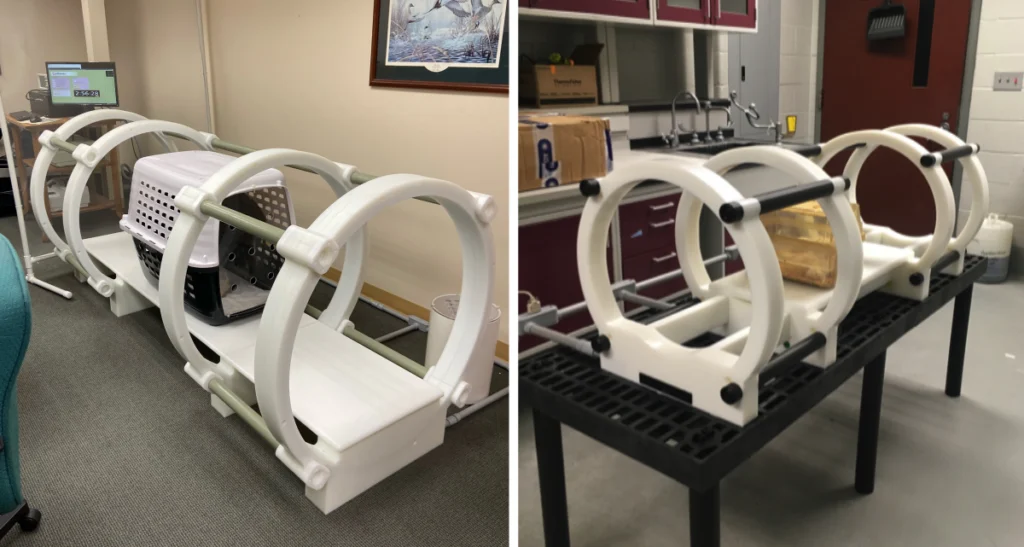
Prototype device at left is 8’ long with a 35” diameter. ~600 lbs., sized for human patients.
Prototype device at right is 4’ long with an 18” diameter, shown here treating mice.
Both devices use wall power, generate no heat, require minimal shielding and no floor supports.
Commercial veterinary device will be between the two sizes.
Device ensures a uniform electric field throughout the patient area and a pulse pattern optimized to open sodium channels.
Designed and manufactured by The Phantom Laboratory in Greenwich, NY.
Malignant melanomas are often misdiagnosed or discounted when the disease is present in early, more treatable stages. When present during later stages of disease treatment options tend to be more limited, less effective. Source >
The exact process for human patients is still yet to be determined, but this is how TOL is currently administered for pet dogs and cats with cancer:
Take and fix biopsy, assay for overexpression of sodium channels. If candidate is suitable, image tumor and begin dosing drug orally 6 days pre-treatment.
Place pet in carrier in device, no sedation or restraints needed. Treat for 2 hours on the first day and 2 hours on the second day, with a break halfway through each session.
Take post-treatment biopsy and assay, image and compare. Get information from owner about pet’s behavior and plan additional courses of treatment two to three weeks apart.
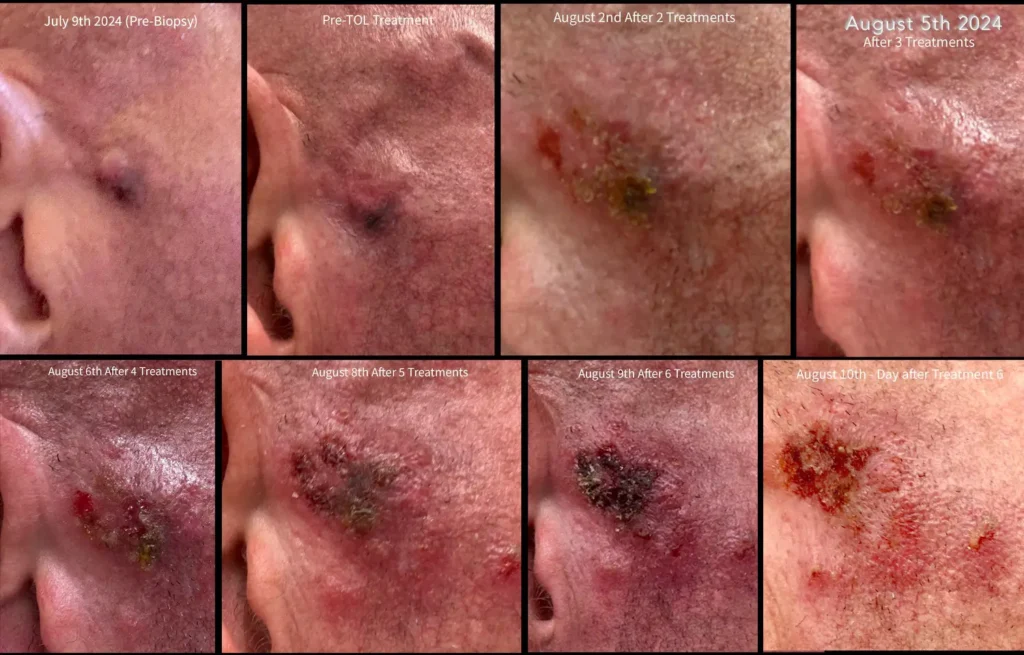
None of our human cancer patients have exhibited serious adverse events
Many have seen significant tumor shrinkage